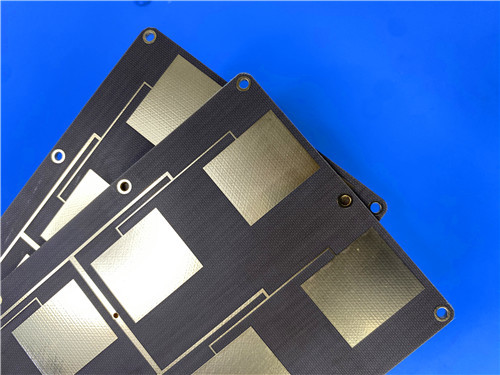
Il PCB TLX-9 ¥ 10 mil, EPIG (senza nichel) per la dominazione ad alta frequenza
Nel mondo dell'ingegneria RF e microonde, il substrato non è solo un supporto fisico per il rame, è il cuore del gioco dell'integrità del segnale.perdita minima di segnale, e una finitura superficiale che non rovina la tua impedenza, smetti di guardare la FR-4 standard.
Inserire ilTLX-9 PCB(10 mil, EPIG senza nichel)Si tratta di una scheda rigida a due strati progettata per applicazioni in cui l'assorbimento dell'umidità e la stabilità della costante dielettrica (DK) non sono negoziabili.
Diamo un'occhiata alle specifiche, allo stackup, e perché questo è importante per il vostro prossimo LNA, antenna o amplificatore ad alta potenza.
La Fondazione: Taconic TLX-9
La stella di questa costruzione è ilTLX-9A differenza dei materiali RF standard che derivano con la temperatura o l'umidità, TLX-9 è un cavallo di battaglia.
- Costante dielettrica (DK):2.5 @ 10 GHz (strettamente controllato su frequenza/temperatura)
- Fattore di dissipazione (Df):0.0019 @ 10 GHz
- Assorbimento di umidità:< 0,02% (praticamente zero durante la fabbricazione)
Perché questo è importante? un Df di 0,0019 significa una perdita di inserimento incredibilmente bassa. l'assorbimento di umidità <0,02% significa che il passaggio di fase non cambierà la prossima settimana perché il tempo è cambiato.Questo materiale contiene anche unUL 94 V-0Per non sacrificare la sicurezza per le prestazioni.
La costruzione: minimale ma potente
Questo e' un design rigido a due strati, senza brividi, ad alte prestazioni.
- Strato superiore:35 μm Rame (1 oz)
- Il nucleo:Taconic TLX-9 0,254 mm (10 mil)
- Strato inferiore:35 μm Rame (1 oz)
Dettagli del consiglio:
- Dimensioni:910,6 mm x 45,3 mm (± 0,15 mm)
- Spessore:0.3 mm di finitura (che è molto sottile, ideale per le custodie strette o le applicazioni flex-to-fit).
- Traccia/spazio:5/6 mils (abbastanza stretta per un'inoltro RF denso).
- Dimensione minima del foro:0.3 mm (perforazione meccanica standard).
- Via rivestimento:20 μm (abbastanza robusto per l'affidabilità).
In particolare assente:C' è- No, no.maschera di saldatura in alto o in basso, e- No, no.Per i disegni ad alta frequenza, la maschera di saldatura aggiunge perdite e variazioni di fase imprevedibili.
La finitura: perché l'EPIG (senza nichel)?
Questa tavola usaEPIG (oro in immersione in palladio senza elettro), in particolare laNon contenenti nichelvariante.
L'ENIG standard utilizza uno strato di barriera di nichel. Il nichel è ferromagnetica e perdente alle alte frequenze.
- D'oro(per saldabilità e resistenza alla corrosione)
- Palladio(come barriera di diffusione)
- Nessuna perdita magneticanei tuoi percorsi RF.
Questo è lo standard d'oro per le schede RF dove ogni 0.1dB di perdita conta.
Le statistiche sui PCB: semplici ma funzionali
Guardando la lista delle reti e il numero di blocchi conferma che si tratta di un circuito RF mirato, non di una scheda madre digitale complessa.
- Componenti:29
- Total Pads:45
- Perni per buchi:24 (probabilmente per i connettori o i componenti RF a foratura)
- Pad SMT superiori:21
- Pad SMT di fondo:0 (Tutti i componenti sul lato superiore)
- Vias:19
- Reti:2 (in sostanza un singolo percorso RF più terra.
Performance termica e meccanica
I componenti RF si riscaldano.
- Conduttività termica:0.19 W/m/K (Rispetibile per il PTFE).
- CTE (x-y):9-12 ppm/°C (corrisponde bene al rame ̇ buona affidabilità durante il ciclo termico).
- CTE (asse z):130-145 ppm/°C (Standard per il PTFE; assicurarsi che i fori rivestiti siano robusti).
- Resistenza alla buccia:Non si sollevano facilmente i cuscinetti.
Per chi e' questo?
Sulla base delle proprietà del TLX-9, questa scheda è progettata per:
-
LNA, LNB, LNC(Blocchi/convertitori a basso rumore)
-
Antenne PCS/PCN di grande formato(Servizio/Rete di comunicazioni personali) ¢ Il 2,5 DK consente di regolare l'antenna in modo prevedibile.
-
Amplificatori ad alta potenzaL'elevata rottura dielettrica (>60 kV) e le basse perdite garantiscono l'efficienza.
-
Componenti passiviLa DK strettamente controllata garantisce che la frequenza centrale non vaghi.
Qualità e disponibilità
- Standard di qualità:IPC-Class-2 (Standard per l'hardware RF commerciale; consente imperfezioni estetiche minori ma garantisce la funzionalità elettrica).
- Esame:Test elettrico al 100% prima della spedizione.
- Disegni:Gerber RS-274-X (standard industriale).
- Disponibilità:In tutto il mondo.
La sentenza
Se si progetta una parte anteriore di un ricevitore sensibile o una catena di trasmissione ad alta potenza nell'intervallo GHz, ilTLX-9 10 mil EPIGIl pannello elimina tre principali problemi: deriva dell'umidità, perdita indotta dal nichel e tolleranza al DK.
Si tratta di una scheda minimalista (di 2 strati, senza maschera, senza seta) costruita per massime prestazioni RF.Ma per il purista dell' integrità del segnaleQuesto è un sogno.
Specificità:
- Materiale:Taconic TLX-9 (PTFE/vetro tessuto)
- Finisci:EPIG (senza nichel)
- DK/Df:2.5 / 0.0019 @ 10GHz
- Spessore:0.3 mm
- Cu Peso:1 oz di strati esterni
Pronti a passare l'FR-4?


 Il tuo messaggio deve contenere da 20 a 3000 caratteri!