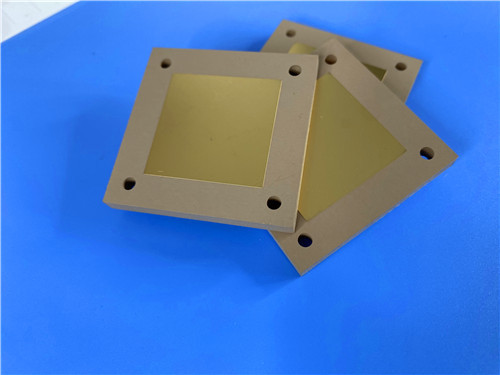
Nel mondo dell'ingegneria RF e delle microonde, la scelta del materiale del substrato spesso fa la differenza tra un progetto che funziona e uno che eccelle. Questo caso di studio esamina un PCB personalizzato che sfrutta Rogers TMM6, un materiale termoindurente per microonde, per creare una scheda a 2 strati robusta e ad alte prestazioni. L'approccio minimalista del design, senza maschera di saldatura, senza serigrafia e una finitura superficiale EPIG specializzata, evidenzia un'attenzione particolare all'integrità del segnale e all'affidabilità a lungo termine.
Il brief: una soluzione simile alla ceramica per circuiti RF esigenti
Questo progetto era incentrato sulla progettazione e fabbricazione di un circuito stampato rigido a 2 strati per applicazioni critiche a radiofrequenza e microonde. La scheda misura 85,6 mm x 99,75 mm ed è costruita per fornire prestazioni costanti ad alta frequenza in applicazioni che vanno dalle comunicazioni satellitari agli amplificatori di potenza.
Decodificare la distinta base: il “perché” dietro il “cosa”
Le specifiche rivelano una filosofia di progettazione radicata nella scienza dei materiali, dove ogni scelta è guidata dalla necessità di prestazioni elettriche prevedibili, con poche perdite e stabili.
Il substrato: Rogers TMM6 – Un'alternativa termoindurente al PTFE
La decisione più critica è stata quella di selezionare Rogers TMM6 come materiale di base. A differenza dei tradizionali laminati a microonde a base di PTFE, TMM6 è un composito polimerico termoindurente riempito con ceramica. Questa distinzione è fondamentale e offre numerosi vantaggi significativi.
Innanzitutto, TMM6 fornisce l'elevata costante dielettrica (Dk = 6,0 ± 0,08 a 10 GHz) e il basso fattore di dissipazione (0,0023 a 10 GHz) necessari per progetti compatti a microonde. Un Dk più elevato consente geometrie dei circuiti più piccole, il che è essenziale per la miniaturizzazione nelle applicazioni satellitari e aerospaziali.
In secondo luogo, e forse ancora più importante, la sua natura termoindurente fa sì che non presenti i problemi di "creep e flusso freddo" comuni ai materiali PTFE. Ciò lo rende meccanicamente stabile nel tempo e nella temperatura, garantendo che i fori passanti placcati rimangano affidabili e che le dimensioni critiche rimangano entro le specifiche per tutta la vita del prodotto. Anche il suo coefficiente di espansione termica (CTE) è abbinato a quello del rame, migliorando ulteriormente l'affidabilità del foro passante placcato.
Una filosofia di progettazione basata sulla pura integrità del segnale
Le caratteristiche visivamente più distintive della scheda sono la completa assenza di maschera di saldatura e serigrafia su entrambi i lati. Si tratta di una scelta progettuale deliberata e avanzata per applicazioni ad alta frequenza:
- Minimizzazione delle perdite:La maschera di saldatura ha le proprie proprietà dielettriche, che possono introdurre perdita di segnale e variazioni di impedenza alle frequenze delle microonde. Rimuovendolo, il segnale interagisce solo con il substrato TMM6 e le tracce di rame, fornendo il percorso di trasmissione più puro possibile.
- Evitare la deriva delle prestazioni:Nel corso del tempo, la maschera di saldatura può assorbire l'umidità e le sue proprietà dielettriche possono cambiare. Per applicazioni come le comunicazioni satellitari, dove la stabilità a lungo termine è fondamentale, l’eliminazione di questa variabile rappresenta un vantaggio significativo.
- Tolleranza all'alta tensione:L'assenza di uno strato dielettrico può essere vantaggiosa anche nei progetti con potenziali ad alta tensione o RF ad alta potenza, dove la rottura della maschera di saldatura potrebbe rappresentare un problema.
La finitura superficiale: EPIG – Senza nichel per applicazioni specializzate
La scelta dell'EPIG (Electroless Palladium Immersion Gold) è un altro dettaglio fondamentale. EPIG è una finitura priva di nichel che utilizza uno strato di palladio sotto l'oro. Questa è una scelta sempre più popolare per alcune applicazioni ad alta frequenza e di wire bonding perché elimina lo strato di nichel, che può essere leggermente magnetico e introdurre perdite o influenzare le prestazioni dei circuiti RF sensibili. Fornisce inoltre una superficie molto piatta, eccellente per la saldabilità e l'incollaggio del filo d'oro.
Statistiche di costruzione e prestazioni
I dettagli di fabbricazione del PCB rafforzano il suo orientamento alle alte prestazioni:
- Dimensioni della scheda:85,6 mm x 99,75 mm con una tolleranza stretta di +/- 0,15 mm, che indica requisiti di adattamento precisi.
- Impilazione:Una struttura a 2 strati con rame da 35 μm (1 oz) su entrambi i lati di un nucleo TMM6 da 1,27 mm (50 mil).
- Traccia/Spazio:Un minimo di 4/6 mil, consentendo il routing ad impedenza controllata.
- Spessore della placcatura:20 μm tramite placcatura, garantendo connessioni a foro passante robuste e affidabili.
- Test:Il test elettrico al 100% prima della spedizione garantisce le prestazioni funzionali.
Le decisioni progettuali: uno sguardo più da vicino
Le statistiche della scheda dipingono l'immagine di un sottocircuito altamente specializzato e focalizzato. Contiene23 componenti,41 assorbenti totali(con 25 piazzole a foro passante e 16 SMT),6 vie, e solo2 reti.
Questa semplice struttura di rete – un progetto con solo due reti – è un chiaro indicatore del suo scopo. Non è una scheda digitale complessa e multifunzionale. Invece, è quasi certamente un componente RF o microonde discreto, come ad esempio:
- Un filtro o accoppiatore:Si tratta intrinsecamente di dispositivi a due porte (ingresso/uscita) con un piano di terra.
- Uno stadio dell'amplificatore di potenza:Un transistor dell'amplificatore potrebbe avere alcune connessioni di polarizzazione, ma il percorso RF è fondamentalmente un progetto "2-net".
- Un trasformatore di impedenza o Balun:Queste reti corrispondenti hanno una topologia di connessione semplice.
La sua conformità con IPC-Class-2 conferma un livello di affidabilità adatto per "prodotti elettronici di servizio dedicati", una categoria che si adatta perfettamente alle applicazioni aerospaziali, di difesa e commerciali ad alta affidabilità per le quali è progettato TMM6.
Conclusione: una soluzione appositamente progettata per l'affidabilità ad alta frequenza
Questo PCB personalizzato è un esempio convincente di come la scelta dei materiali e il design minimalista convergono per creare un prodotto superiore. Selezionando Rogers TMM6, il progettista ha sfruttato le prestazioni elettriche di un materiale riempito con ceramica ottenendo al tempo stesso i vantaggi meccanici e di lavorazione di una resina termoindurente. La decisione di rinunciare alla maschera di saldatura e alla serigrafia, unita all'uso di una finitura superficiale EPIG priva di nichel, dimostra un profondo impegno nel preservare la fedeltà del segnale e garantire l'affidabilità a lungo termine.
Questa non è una scheda generica; si tratta di una soluzione appositamente realizzata, probabilmente destinata al front-end RF critico di un satellite, un radar o un sistema di comunicazione. Ciò testimonia il fatto che nell’elettronica ad alta frequenza, meno può davvero essere di più.


 Il tuo messaggio deve contenere da 20 a 3000 caratteri!